Alloy
Specify 5086 H32 or 6061 T6 when your job requires a particular aluminum material. Including the alloy at the start prevents a quote from being built around the wrong material path.
Aluminum butt-weld fittings
Specify the bend, size, schedule and alloy. We will help move your aluminum piping job toward a complete quote.
Request a Quote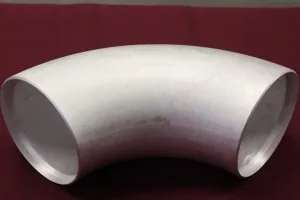
Specified for the job
When an aluminum piping run changes direction, the elbow needs to match more than its nominal diameter. The bend angle, radius, schedule, alloy, connection preparation and quantity all affect whether the fitting belongs in the finished assembly.
Aluminum Pipe Fittings supplies 5086 H32 and 6061 T6 fittings from stock in 1/2 inch through 8 inch sizes, with custom fittings, flanges and pipe available up to 48 inches. Start with the requirements you already have, then use the quote process to confirm the practical path for the job.
Standard butt-weld aluminum pipe elbows cover the common direction changes used in fabricated piping. Long-radius 90-degree and 45-degree elbows are listed from 1/2 inch through 8 inches. Long-radius 180-degree elbows are listed from 1/2 inch through 6 inches. Short-radius 45-degree, 90-degree and 180-degree elbows are listed from 1 inch through 8 inches.
A long-radius elbow is often selected when the piping layout allows a broader turn. A short-radius elbow is used where the available space or drawing calls for a tighter turn. The correct choice comes from the project requirements, including the piping route, available clearance, fitting schedule, weld preparation and final specification.
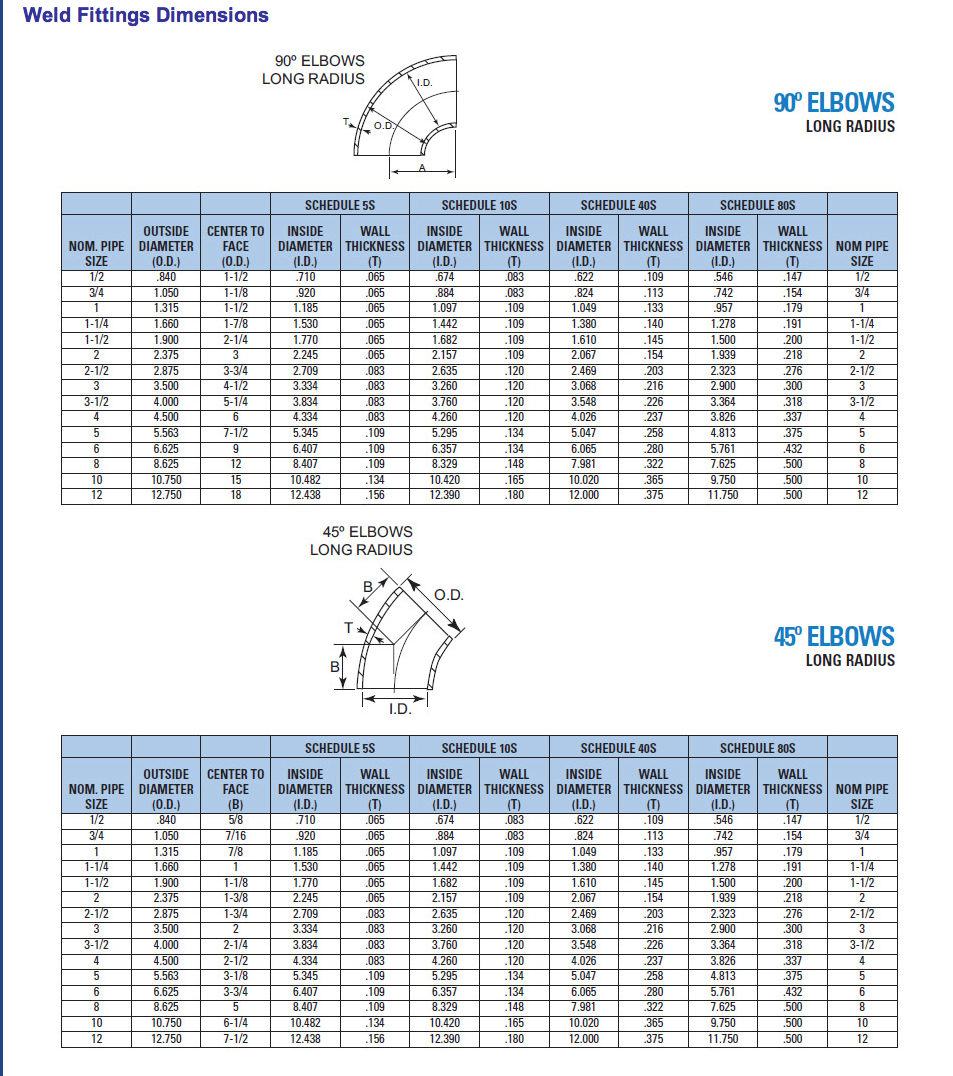
Dimension review
Use the published dimension charts as a practical starting point when reviewing center-to-end measurements and the physical space around a change in direction. The final order should still identify the nominal pipe size, wall or schedule, alloy, elbow angle and any drawing-specific dimensions.
If the job has a special transition, unusual centerline requirement or nonstandard connection, include the drawing with the quote request. That gives the sales team a usable basis for checking the fitting path instead of trying to reconstruct critical details from a short description.
Nominal pipe size alone does not define an aluminum elbow. A useful request keeps the line size together with the bend angle, radius, schedule or wall, alloy and connection type. These details work together. An elbow that has the right diameter but the wrong radius or wall is not a practical substitute when it reaches the fit-up stage.
For a 90-degree aluminum elbow, state whether the drawing calls for a long-radius or short-radius configuration. For 45-degree and 180-degree elbows, include the same radius requirement and any centerline dimensions shown on the drawing. When the line must match existing pipe or another fitting family, include those mating dimensions as well.
Job documents can use several ways to describe wall thickness. If the requirement is shown as a schedule, provide the schedule. If it is shown as a direct wall dimension, provide that measurement and the relevant drawing notes. Clear input lets the sales team review the request against the available fitting range instead of making assumptions that can slow the order down later.
The elbow is one component in a larger run. Before requesting a quote, look at the components immediately before and after the bend. Their size, wall, alloy and end preparation help define what the elbow needs to connect to. Include any companion tees, reducers, flanges, nipples or straight pipe in the request when they need to work as a set.
Dimension charts are helpful for checking standard fitting geometry, but they do not replace the project drawing or a final review of the application. Use the chart to identify the likely configuration and then send the drawing details that govern the finished assembly. That is especially useful when the piping route has limited clearance, the bend connects to fabricated work or the fit-up must match existing components.
For larger sizes and custom configurations, a complete package of information is more valuable than a partial list of item names. Include the count for each elbow, any required material documentation, the delivery location and the date the material is needed. Those details allow the team to address the practical questions around supply and delivery in the same conversation as the fitting specification.
Stock fittings are the practical starting point for many projects, especially when the size, schedule and alloy fall within the listed range. When the drawing asks for a larger diameter, a special elbow, a matching flange or a related pipe component, custom fabrication can keep the work moving without forcing the job into an unsuitable catalog option.
Custom fittings, flanges and pipe are available up to 48 inches. Provide the drawing, dimensions, alloy, wall requirement, quantity and delivery need. The more complete the request, the more directly the team can review the fitting configuration and respond with a useful quote path.
Browse the aluminum butt-weld fitting range →Quote checklist
Frequently asked questions
The standard butt-weld range lists long-radius 90-degree and 45-degree elbows from 1/2 inch through 8 inches. Long-radius 180-degree elbows are listed from 1/2 inch through 6 inches, while short-radius elbows are listed from 1 inch through 8 inches.
The stock aluminum fitting alloys listed on the site are 5086 H32 and 6061 T6. Include the required alloy in your request so the team can match the elbow to the job.
Yes. Custom fittings, flanges and pipe are available up to 48 inches. Send the drawing, dimensions, alloy, wall requirement, quantity and delivery need so the request can be reviewed accurately.
Include the elbow angle, long-radius or short-radius requirement, nominal pipe size, schedule or wall, alloy, quantity, connection details, drawing information and delivery location.
Send the elbow requirements, alloy, quantity and delivery details.