Reducer geometry
State whether the transition is concentric or eccentric. For an eccentric reducer, include the drawing orientation or installation notes when they control which side of the run stays aligned.
Aluminum butt-weld fittings
Specify both pipe sizes, reducer geometry, schedule and alloy. We will help turn the transition in your aluminum piping run into a complete quote.
Request a Quote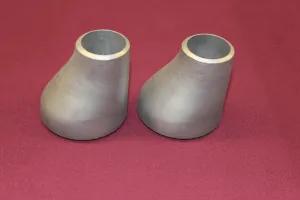
Specified for the job
An aluminum pipe reducer joins two different nominal pipe sizes in the same run. The larger end, smaller end, reducer geometry, schedule or wall, alloy, connection preparation and quantity all need to line up before the transition can be fitted into the assembly.
Aluminum Pipe Fittings supplies 5086 H32 and 6061 T6 fittings from stock in 1/2 inch through 8 inch sizes, with custom fittings, flanges and pipe available up to 48 inches. Start with the drawing, takeoff or replacement dimensions you have, then use the quote process to confirm the practical path for the job.
Concentric and eccentric reducers both change the pipe size, but they do not place the smaller line in the same position. A concentric reducer keeps the centerline centered as the diameter changes. An eccentric reducer keeps one side of the run aligned while the opposite side transitions. The project drawing, piping orientation and connection requirements determine which configuration belongs in the assembly.
The listed butt-weld range includes concentric and eccentric reducers from 1/2 inch through 8 inches, in schedules from Sch 10 through Sch XXH. That gives a defined starting point for a standard transition, but the final request still needs both nominal pipe sizes, the required geometry, the schedule or wall, the alloy and the required quantity. One diameter alone does not describe the reducer.
Dimension review
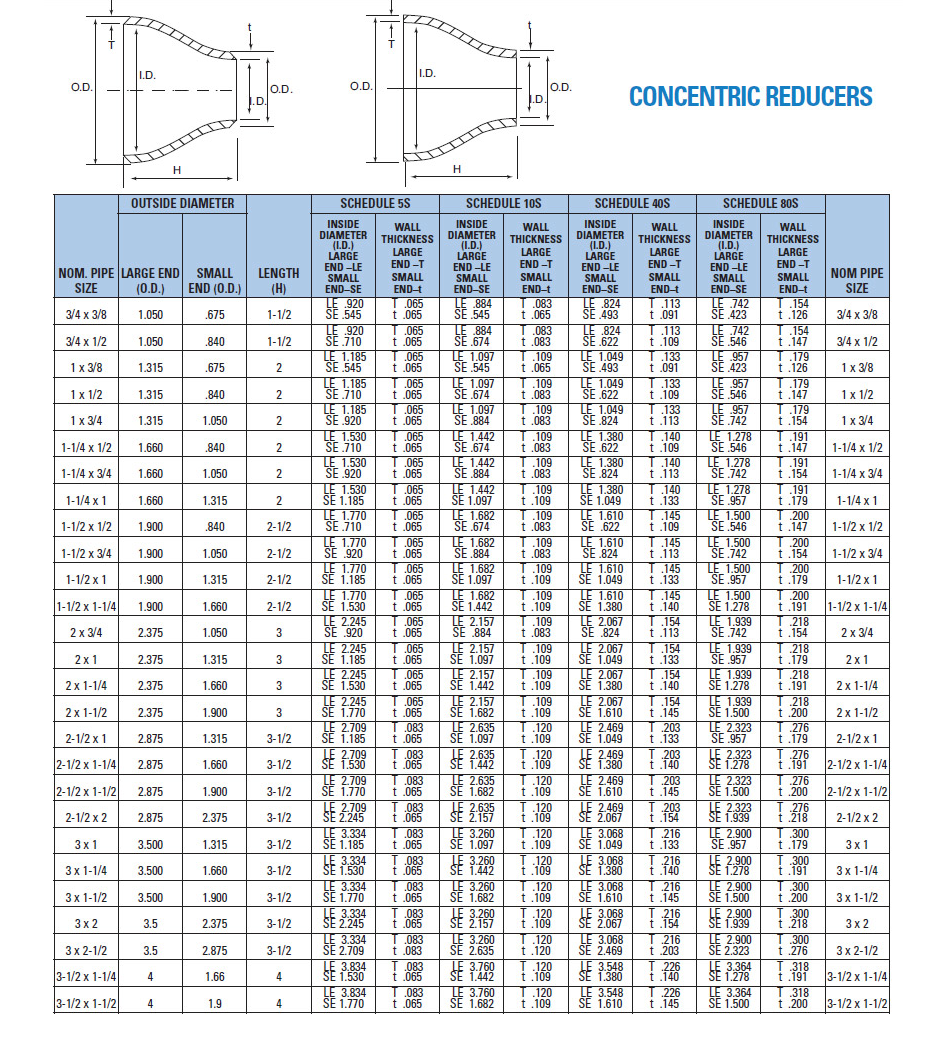
The published dimension charts are a practical starting point for reviewing standard center-to-end measurements and the physical room needed for the transition. They help identify the likely reducer configuration before a request is prepared.
The chart does not replace the job drawing or final piping specification. Confirm the large-end and small-end sizes, schedule, alloy and connection requirements for the installation. If the fitting needs a particular orientation, a special length, a larger size or a connection that must match fabricated work, send the drawing with the quote request so the transition can be reviewed in context.
A reducer should be described from the larger nominal pipe size to the smaller nominal pipe size. For example, a transition from a 4-inch line to a 2-inch line requires both dimensions in the request. The same applies whether the fitting is concentric or eccentric. Include the reducer type so the quote is not built around an assumption about the centerline or alignment.
Schedule or wall is equally important. The reducer needs to suit the adjoining pipe and fittings, not simply share the same nominal diameters. If the job documents specify a schedule, provide that schedule. If they show a direct wall thickness, include the measurement and the relevant drawing notes. A reducer with the correct end sizes but the wrong wall or alloy is not a practical replacement at fit-up.
When the reducer joins existing pipe, include the dimensions or details of the mating components. In a new assembly, include the isometric, bill of materials or marked-up drawing that governs the transition. That gives the sales team the information needed to assess the actual connection points rather than trying to infer the fitting from a partial description.
Do not rely on an incomplete item code when the job has a defined specification. Include the drawing reference, line number or detail that identifies the reducer in the assembly. That context can show whether the transition must be installed in a particular direction, match an existing spool or leave room for welding and adjacent components.
A reducer may sit between straight pipe, an elbow, a tee, a flange, a valve connection or fabricated work. The parts immediately before and after it can affect the practical fit. Review the adjacent sizes, wall, alloy, end preparation and available clearance before sending the request. If related components need to work as a set, include them in the same quote package.
Dimension charts are useful for narrowing a standard geometry, but they do not settle every installation question. A concentric reducer can be the right physical form when the pipe centerline needs to remain centered. An eccentric reducer can be the right form when the piping layout requires one side to remain aligned. The job documents govern the final configuration, especially where orientation, drainage, venting, pump connections or existing pipe control the installation.
For replacement work, photographs, markings and measured dimensions can be helpful alongside the fitting description. For a planned installation, the piping drawing is usually the clearest source. Sharing the supporting details early reduces follow-up questions and helps the team separate a standard stock path from a request that needs custom review.
When multiple fittings are needed, send the full list with sizes, schedules, alloy requirements, quantities and delivery target. A complete package is easier to review than individual item descriptions, and it gives the sales team a better view of which reducers, elbows, tees, flanges or pipe components need to align in the finished assembly.
Stock fittings are a practical starting point when the requested end sizes, geometry, schedule and alloy fall within the listed range. When the drawing calls for a larger diameter, a nonstandard transition, a special length or related custom flanges and pipe, custom fabrication can keep the project aligned with the actual specification.
Custom fittings, flanges and pipe are available up to 48 inches. Include the drawing, large-end and small-end dimensions, concentric or eccentric requirement, alloy, wall requirement, quantity and delivery need. Complete information lets the team review the reducer as part of the real piping assembly and respond with a useful quote path.
Browse the aluminum butt-weld fitting range →Quote checklist
Frequently asked questions
The listed butt-weld range includes concentric and eccentric reducers from 1/2 inch through 8 inches, in schedules from Sch 10 through Sch XXH. Include both nominal pipe sizes and the wall or schedule requirement so the transition can be reviewed correctly.
A concentric reducer keeps the pipe centerline centered as the size changes. An eccentric reducer keeps one side aligned while the other offsets. The drawing and piping orientation determine which geometry belongs in the installation.
The stock aluminum fitting alloys listed on the site are 5086 H32 and 6061 T6. State the required alloy in the quote request so the reducer is reviewed against the right material requirement.
Yes. Custom fittings, flanges and pipe are available up to 48 inches. Send the drawing, large-end size, small-end size, alloy, wall requirement, quantity and delivery need for a practical review.
Send both pipe sizes, reducer geometry, alloy, quantity and delivery details.