Run and branch sizes
State the nominal size of the main run and the branch. Identify whether the tee is equal or reducing so the fitting can be matched to the piping layout.
Aluminum butt-weld fittings
Specify the run, branch, schedule and alloy. We will help turn your aluminum tee fitting requirements into a complete quote.
Request a Quote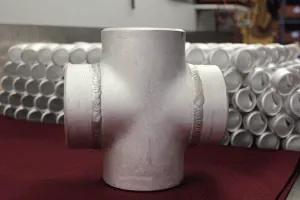
Specified for the job
An aluminum pipe tee creates a branch in a piping run, so the fitting needs to match the line on both the run and the outlet. The nominal run size, branch size, schedule or wall, alloy, connection preparation and quantity all matter before a tee can be placed into the finished assembly.
Aluminum Pipe Fittings supplies 5086 H32 and 6061 T6 fittings from stock in 1/2 inch through 8 inch sizes, with custom fittings, flanges and pipe available up to 48 inches. Start with the drawing or takeoff you have, then use the quote process to confirm the practical path for the job.
A tee is not fully described by one pipe size when the branch differs from the main run. An equal tee uses the same nominal size through the run and branch. A reducing tee has a smaller branch connection than the run. In either case, the request should show the run size, branch size and the schedule or wall requirement for the complete fitting.
The published butt-weld range lists seamless and welded tees and crosses from 1/2 inch through 14 inches, with schedules from Sch 10 through Sch XXH. That gives buyers a defined starting point, but the final quote needs the dimensions and configuration that actually appear on the job documents. When the tee joins a change in direction, a reducer, a flange or existing pipe, include those companion components or the relevant drawing detail as well.
Dimension review
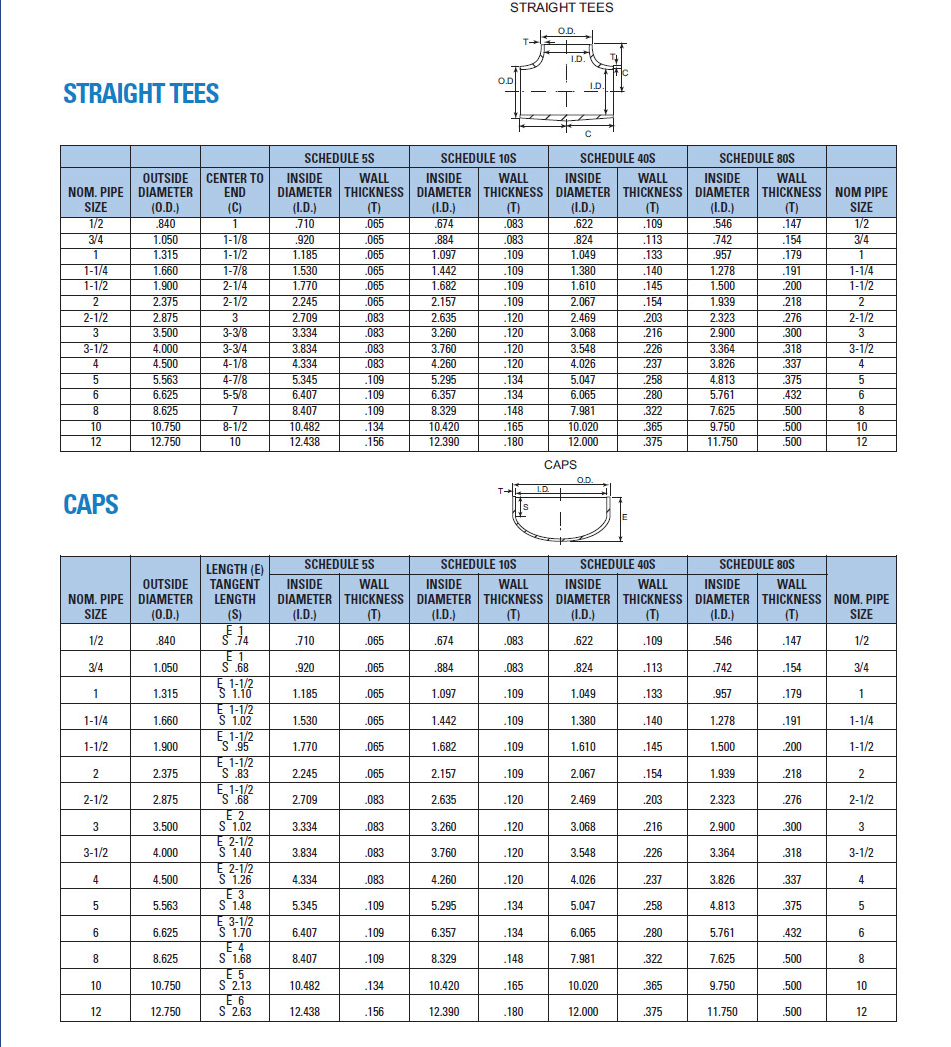
The published tee chart is a useful starting point for reviewing standard center-to-end dimensions and the physical room around a branch connection. It helps a buyer identify the likely fitting configuration before the final request is prepared.
The chart does not replace the job drawing or the final piping specification. Confirm the nominal sizes, schedule, alloy and connection requirements shown for the assembly. For a nonstandard branch location, a special end, a larger size or a fitting that must match fabricated work, send the drawing with the quote request so the configuration can be reviewed accurately.
Equal tees are used where the branch and run share the same nominal pipe size. They make sense when the branch needs the same capacity or when the piping design calls for a consistent line size at the junction. Reducing tees are used when the branch line has a smaller nominal size than the main run. The requirement should identify both dimensions, not simply the larger pipe size.
For either configuration, the wall or schedule affects how the tee matches the pipe and adjoining fittings. State the schedule when it is specified. If the drawing shows a direct wall thickness instead, include that measurement and any fabrication notes. A tee with the correct branch size but the wrong wall or alloy is not an interchangeable part at fit-up.
When the final configuration has a special orientation or a requirement that is not obvious from the item description, a marked-up isometric or drawing is more useful than an assumption. It lets the sales team review the actual connection points and gives the quote a better chance of reflecting the material the job needs.
A tee often connects more than three pieces of pipe. The surrounding system can include reducers, elbows, flanges, straight pipe, valves or custom fabricated components. Reviewing those neighboring parts helps make sure that the tee's run, branch, alloy, wall and preparation all work together at the connection points.
For standard fittings, the dimension chart can help narrow the request to a known configuration. For a replacement part, provide the existing dimensions, identifying marks and any drawing information available. For a new fabrication package, include the documents that govern the piping route and the material requirements. This avoids turning a basic tee request into a series of follow-up questions later in the process.
In a replacement or tie-in job, identify which pipe is existing and which material is new. Include flange faces, mating fittings or weld-end details when they control the fit-up. A dimension chart can narrow the standard geometry, but the finished connection still has to suit the actual piping route, clearance and fabrication sequence. Sharing that context before the order is reviewed reduces the risk of a tee that is broadly correct on paper but impractical at installation.
If more than one tee or related fitting is needed, send the full list. A single package that includes the fitting descriptions, sizes, quantities, alloy requirements and delivery target is easier to review than isolated line items. It also gives the sales team enough context to identify where a stock fitting may fit the job and where custom fabrication should be considered.
Stock fittings are a practical starting point when the requested run size, branch size, schedule and alloy fall within the listed range. When the drawing calls for a larger diameter, a special reducing arrangement, a custom branch configuration or matching flanges and pipe, custom fabrication can keep the project aligned with the actual specification.
Custom fittings, flanges and pipe are available up to 48 inches. Include the drawing, run and branch dimensions, alloy, wall requirement, quantity and delivery need. Complete information lets the team review the tee as part of the real piping assembly and respond with a useful quote path.
Review all fitting dimension charts →Quote checklist
Frequently asked questions
The listed butt-weld range includes seamless and welded tees and crosses from 1/2 inch through 14 inches. Include the run size, branch size, schedule, alloy and quantity so the correct configuration can be reviewed.
A tee request should identify whether the run and branch are the same nominal pipe size or whether the branch reduces. Include the drawing or both run and branch sizes so the fitting can be evaluated against the job requirements.
The stock aluminum fitting alloys listed on the site are 5086 H32 and 6061 T6. State the required alloy in the quote request so the fitting is reviewed against the right material requirement.
Yes. Custom fittings, flanges and pipe are available up to 48 inches. Send the drawing, dimensions, alloy, wall requirement, quantity and delivery need for a practical review.
Send the run and branch requirements, alloy, quantity and delivery details.