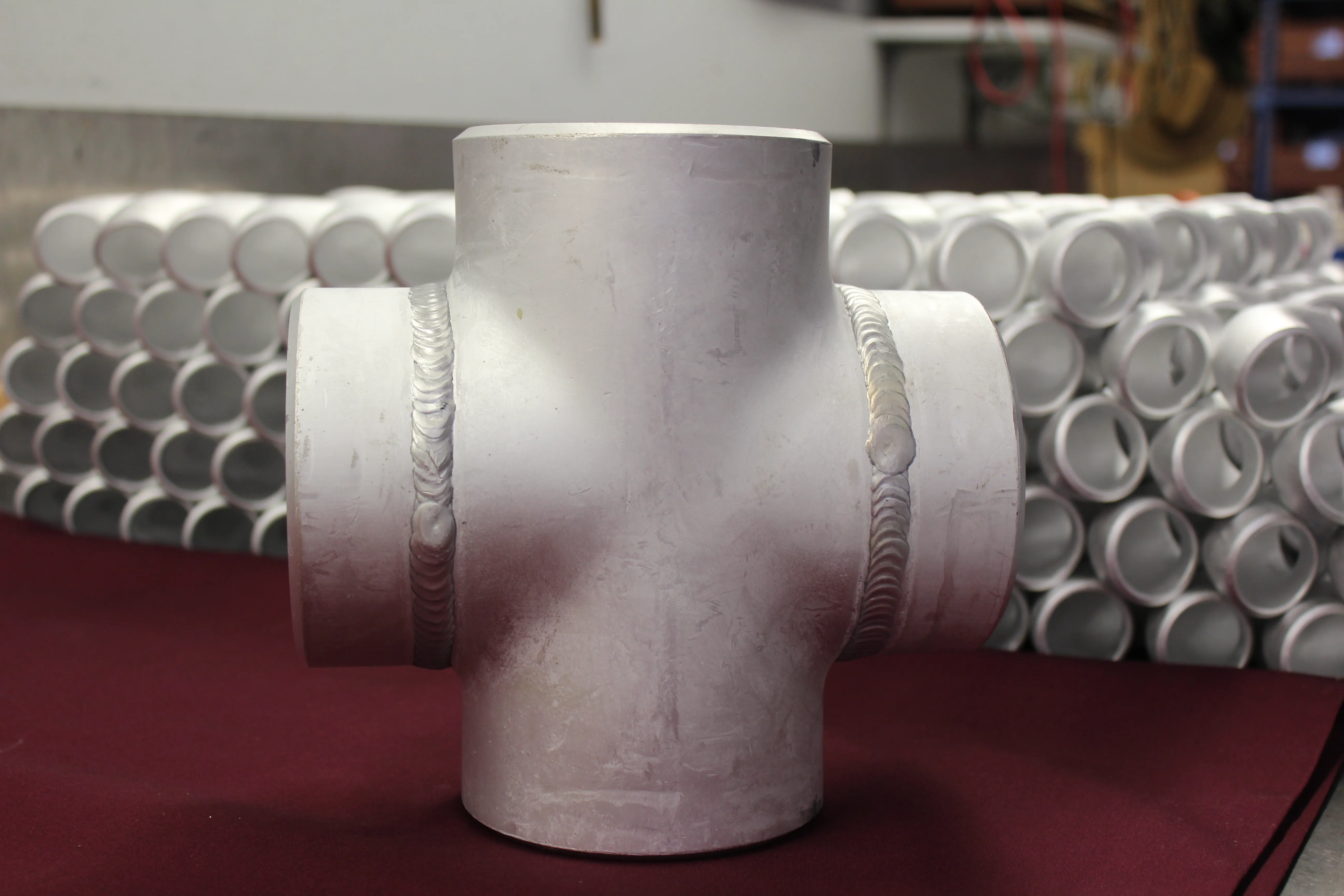
Aluminum pipe and fittings for the complete connection
An aluminum pipe package is more than a list of individual parts. Elbows, tees, reducers, caps, flanges and straight pipe all have to align at the connection points where they meet. The fitting shape, nominal pipe size, schedule or wall, alloy and end preparation should be considered together before an order is released. Aluminum Pipe Fittings stocks 5086 H32 and 6061 T6 fittings from 1/2 inch through 8 inch sizes, with custom fittings, flanges and pipe available up to 48 inches. That combination gives buyers a practical route whether the job calls for a familiar standard fitting or a fabricated component that must follow a drawing.
Start with the piping layout, not a partial part name
A useful request identifies what each part needs to do in the run. An elbow changes direction, a tee or cross creates a branch, a reducer changes pipe size, and a cap closes a line. Flanges and other connections introduce their own mating details. When several of these parts belong to the same assembly, the piping drawing, bill of materials or isometric is usually more useful than isolated part names. It shows the relationship between the pieces and makes clear where a centerline, branch direction, clearance, flange face or existing component controls the selection. A complete layout also makes it easier to spot where a standard item can work and where a custom pipe or fitting needs closer review.
Match the fitting family to the job
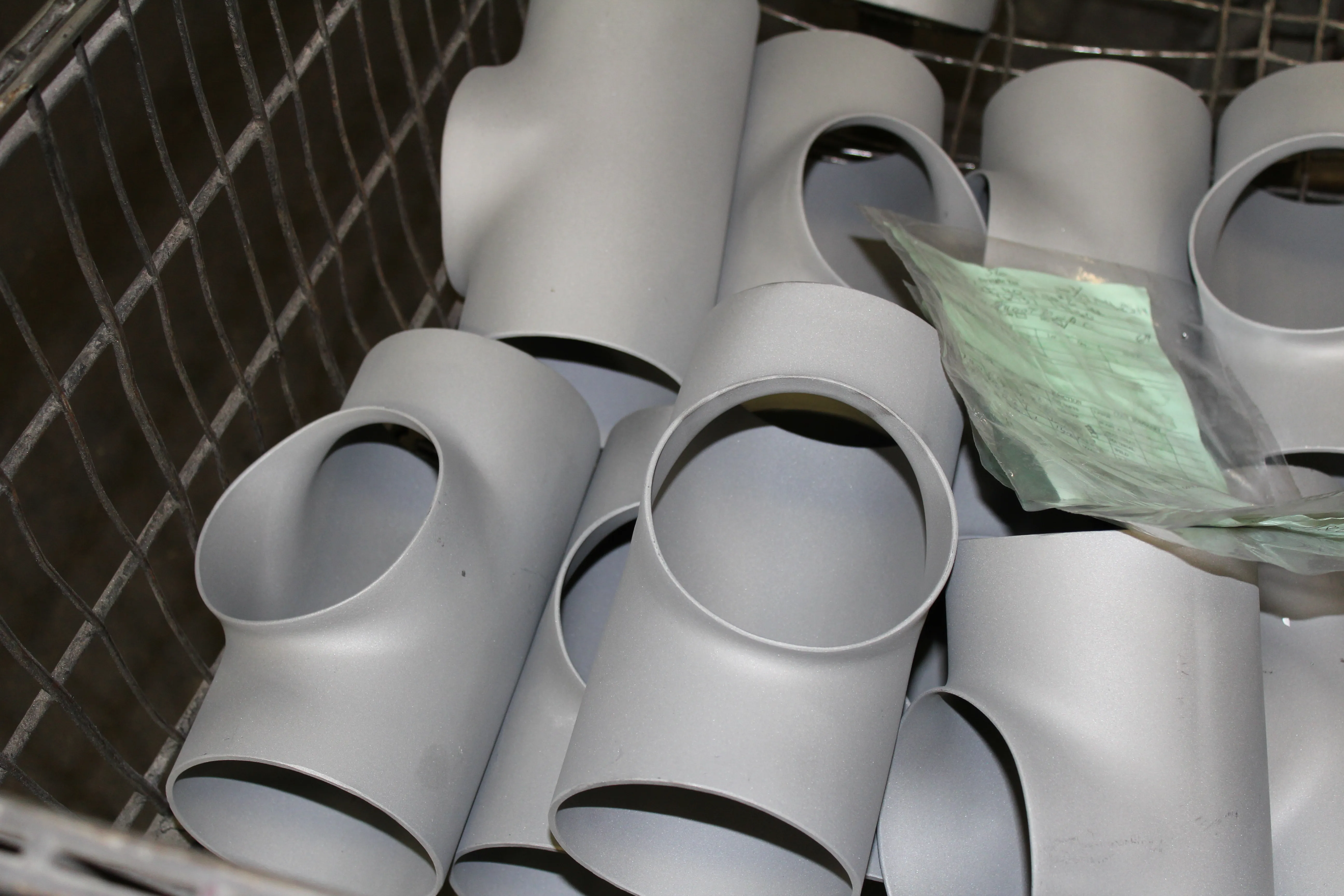
The documented butt-weld range includes long-radius and short-radius elbows, caps, concentric and eccentric reducers, tees, crosses, laterals and wyes. These fitting families serve different jobs even when they share a nominal pipe size. A reducer needs both end sizes and the required concentric or eccentric geometry. A tee needs the run and branch sizes. An elbow needs its angle and radius. Naming those features alongside the pipe size gives the request a defined starting point. Dimension charts can help compare standard configurations with the available space, but the final choice should also account for the adjoining pipe, required wall, material and connection details.
Keep the alloy and wall requirement with every line item
The listed stock aluminum fitting alloys are 5086 H32 and 6061 T6. The material requirement should remain connected to the fitting or pipe it governs, not be left as a general note elsewhere in the request. The same applies to schedule or direct wall thickness. Nominal size alone does not establish whether a fitting will match the adjoining pipe or the expected weld preparation. When an existing component is being replaced, include the available markings, measured dimensions, photographs and earlier documentation. For new work, use the drawing or material list as the source for the required alloy, wall, end condition and inspection or traceability needs. Clear information up front reduces the chance of a suitable-looking part being treated as an interchangeable one.
Use stock fittings where they fit, then move cleanly into custom work
A listed stock fitting is a strong starting point when its geometry, size, schedule and alloy match the job. Custom work becomes more useful when the assembly calls for a larger diameter, unusual transition, special branch arrangement, nonstandard centerline, matching flange or fabricated section of pipe. Aluminum Pipe Fittings can review custom fittings, flanges and pipe up to 48 inches. The important distinction is whether the available drawing and component details establish a standard configuration or show that the finished connection needs something specific. Sending the full package lets the sales team review the parts as a working assembly instead of trying to reconstruct the requirement from separate descriptions.
Include the mating components when the connection controls the result
Pipe and fittings do not operate alone. A fitting may join a flange, valve, vessel nozzle, hose connection or fabricated spool, and those neighboring components can determine the details that matter. For a flange, the face, bore, drilling and pressure class have to suit the mating side. For a butt-weld fitting, the schedule or wall and end preparation need to align with the pipe. For a replacement, a photograph of the existing assembly can be as useful as a nominal size because it shows the orientation and surrounding clearance. Include the related components, especially when their dimensions or materials govern the fit. This gives the review the context needed to identify a practical pipe and fitting path before a quote is prepared.
What to send for an aluminum pipe and fittings quote
Start with the drawing, bill of materials or marked-up sketch when one is available. List the fitting type and nominal pipe size for each item, then add the schedule or wall, alloy, quantity and required connection details. For elbows, include the angle and long-radius or short-radius requirement. For tees, identify the run and branch sizes. For reducers, give both end sizes and whether the transition is concentric or eccentric. For flanges, include the style, pressure class, face, bore and drilling information that govern the joint. Add delivery location and needed-by date so the request can be considered as a complete supply requirement. If the work replaces existing piping, attach photographs, measured details and visible markings alongside the known project documentation.
Frequently asked questions
What aluminum pipe fitting sizes are available? Stock aluminum fittings are listed from 1/2 inch through 8 inches, while the published fitting families have their own documented ranges. Custom fittings, flanges and pipe are available up to 48 inches. Which aluminum alloys are available? The listed stock fitting alloys are 5086 H32 and 6061 T6. State the required alloy with the fitting and pipe details so it can be reviewed against the full assembly. Can pipe and fittings be reviewed together? Yes. A drawing or complete material list is the clearest way to show how elbows, tees, reducers, caps, flanges and pipe need to work together. What makes a quote request more useful? Include the fitting geometry, nominal size, schedule or wall, alloy, quantity, connection requirements, drawing details, delivery location and needed-by date.
READY TO GET A QUOTE?
Send the fitting type, size, alloy, quantity and delivery requirements.