Choosing an aluminum pipe tee fitting starts with the branch line, but the branch is only one part of the decision. A tee changes the piping path, so the size, alloy, wall, end connection, and governing specification all need to work together. A part that looks right on a drawing can still be wrong for the job if the branch size, schedule, or welding requirements are missing from the callout.
For a clean request, define the run first, then the branch, then the material and connection details. That approach helps a supplier distinguish a standard tee from a reducing or custom item before anyone starts comparing availability or lead time.
Start with the job the tee must do
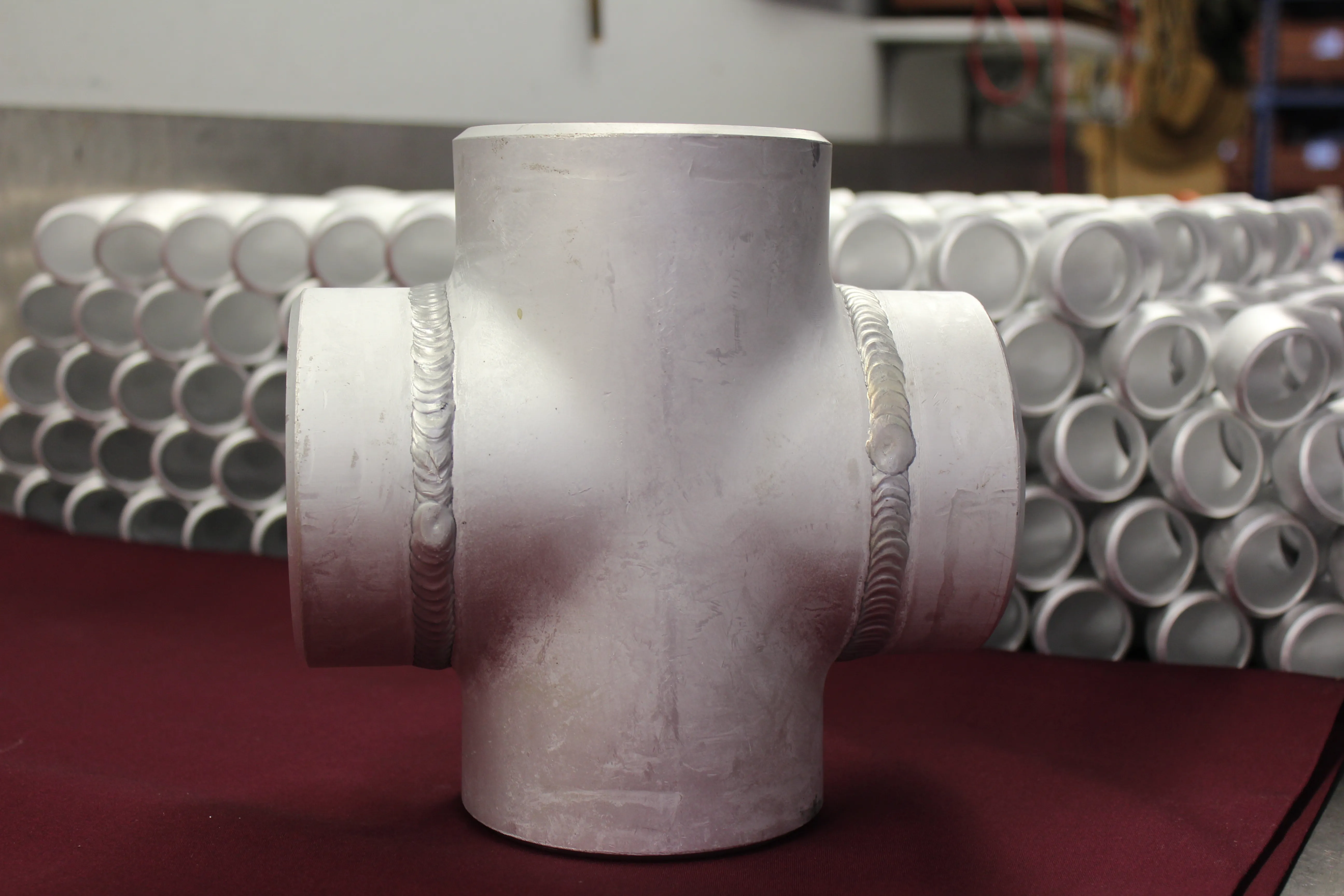
A pipe tee creates a branch from a main run. It may split one flow path into two, collect a branch back into a main line, or provide a connection for equipment, instrumentation, or a drain. The flow arrangement matters because it affects which opening is the branch and whether all three openings need the same nominal size.
Describe the application in practical terms before choosing a fitting. Is the tee part of a continuous main run? Does the branch feed a smaller line? Is it a fabricated assembly where orientation, center-to-end dimensions, or a special outlet position matters? This context helps prevent a tee from being specified as a generic three-way connection when the job actually needs a reducing tee or a custom fabricated branch.
For butt-weld work, start with the available aluminum butt-weld fitting range. The site lists tees and crosses in seamless and welded construction, along with schedules and size coverage that can be used as an initial reference. The final selection still needs to match the project piping specification.
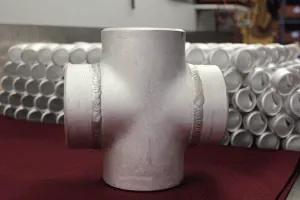
Choose equal or reducing tee geometry
An equal tee, sometimes called a straight tee, has the same nominal size through the run and the branch. A 3 in. equal tee is commonly written as 3 in. x 3 in. x 3 in. This is the right starting point when the branch must match the main line and the piping design calls for the same nominal diameter at every opening.
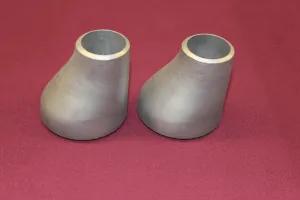
A reducing tee has a smaller branch than the run. A 4 in. x 4 in. x 2 in. tee, for example, keeps the 4 in. run while providing a 2 in. branch outlet. This arrangement is common when a smaller side line leaves a larger process, transfer, or utility run. Do not assume that a tee with two visible large openings is an equal tee. Read the full dimensional callout and confirm which connection is the branch.
Nominal pipe size is not the whole fit-up story. The schedule or wall thickness must be compatible with the connecting pipe, and the end preparation needs to suit the selected joint. The tee and cap dimension chart is useful for checking the general geometry, while the piping drawing and purchase specification control the final requirements.
Match the connection and wall to the piping system
For a butt-weld tee, the run and branch ends are prepared to be welded to matching pipe. That makes the pipe schedule, wall thickness, and end preparation central to the selection. A nominal size match without a compatible wall can create a poor fit-up or force extra fabrication work in the field.
Ask for the actual schedule or wall for every connection, especially on a reducing tee. A reducing branch can have a different wall from the main run, and the purchaser should not leave that detail implied. If the tee must be seamless, welded, radiographed, or made to a particular construction class, state that requirement explicitly in the request.
Aluminum alloy and temper belong in the same line of thinking. Aluminum Pipe Fittings stocks 5086 H32 and 6061 T6 aluminum fitting alloys. Alloy selection should follow the project requirements, service environment, joining procedure, and any material documentation requirements. It is not a substitute to name an alloy without also confirming the fitting geometry and connection details.
Separate design information from order information
A piping drawing may show the intended tee arrangement without giving enough information to purchase the part. Drawings often establish the line route and branch location, while the line list, material class, and project specifications define the alloy, wall, fabrication requirements, and documentation. Review those documents together before releasing an order.
Start by locating the line designation and the branch connection on the drawing. Then check the material class for the required alloy, schedule, and joint type. Finally, compare those details with the bill of materials and any notes that call for testing, traceability, coating, cleaning, or special packaging. This simple sequence catches many of the problems that occur when a tee is selected from a size description alone.
When the branch is tied to equipment, also confirm the equipment nozzle orientation and the available spool length. A correct tee can still create an installation problem if its center-to-end dimension moves a valve, support, or flange into a restricted area. The dimensional check should happen before fabrication or shipment, especially where the piping is preassembled.
Use standards as a check, not a shortcut
Standards help make sure the fitting is being described in a shared language. For factory-made wrought buttwelding fittings, ASME B16.9 covers overall dimensions, tolerances, ratings, testing, and markings for sizes from NPS 1/2 through NPS 48. It is a dimensional and product standard, not a substitute for knowing the service conditions of the system.
For factory-made wrought aluminum and aluminum-alloy welding fittings, ASTM B361 is the specification to review. ASTM describes its scope as factory-made wrought aluminum and aluminum-alloy welding fittings, including butt-welding and socket-end parts made to applicable dimensional standards. That distinction matters when a job requires a specific material standard instead of a general description such as “aluminum tee.”
Use the applicable standards to check the product callout, then keep the drawing, purchase order, inspection requirements, and project specifications in view. A standard reference cannot resolve a missing branch size, an undefined alloy, or an incomplete wall requirement.
Plan for fabrication and inspection early
Some tee selections are straightforward stock decisions. Others need fabrication review because the branch geometry, material, wall, or overall size falls outside the standard range. The earlier the drawing and job requirements are shared, the sooner the supplier can determine whether a standard fitting, a modified fitting, or a custom fabricated tee is the appropriate path.
For a fabricated tee, define what must be held tightly and what can follow normal shop tolerances. Centerline dimensions, branch angle, end preparation, straight lengths, and bore transitions can all affect whether the part fits the assembly. If a weld procedure, radiography requirement, or material certificate is needed, make it part of the initial request. Leaving those requirements until after a price is issued can delay the order or create a quote that does not cover the actual scope.
Inspection is also easier when acceptance criteria are stated in advance. The job may need dimensional verification, material identification, weld examination, pressure testing, or specific records. The right requirement depends on the project, but the buying principle is consistent: describe the evidence the project needs before the tee is made, not after it arrives.
Check dimensions before releasing a purchase order
The most useful dimensions to check are the nominal run size, branch size, center-to-end distance, schedule or wall, and welding end details. In a crowded assembly, center-to-end dimensions can affect valve spacing, support locations, clearances, and the amount of straight pipe available for a weld.
Use the site’s fitting dimension charts for a practical starting point, then verify the final dimensions against the project documents. For a reducing tee, confirm the main run and branch in writing. For a custom tee, add a sketch or drawing that shows the branch orientation, angle, length requirements, and any special bevel, bore, or machining details.
It is also worth confirming how the fitting will be identified and documented. If material traceability, test reports, marking, or project-specific inspection is needed, say so at quote stage. These are easier to plan into the order than to add after a fitting has been selected.
Prepare a quote request that gets the right tee
A concise, complete request reduces back-and-forth and makes it easier to compare like-for-like quotes. For a standard tee, provide the configuration, nominal sizes, alloy, schedule or wall, end connection, quantity, and required delivery date. Add the applicable standard and documentation requirements where they are part of the job.
For a reducing or custom tee, attach the drawing. Include branch orientation, center-to-end dimensions, special machining, welding requirements, and any details that differ from a standard dimensional fitting. If the application has unusual media, temperature, pressure, corrosion, or installation constraints, include those project requirements with the request rather than relying on the fitting name alone.
Common specification mistakes to avoid
The most common mistake is listing only one size for a tee that is actually reducing. The supplier may reasonably read a single nominal size as an equal tee, so the branch reduction must be shown plainly. Another frequent problem is using an outside diameter when the rest of the piping package is based on nominal pipe size. Keep the units and size convention consistent with the project documents.
It is also risky to specify “aluminum” without an alloy and temper, or to list an alloy without a wall or schedule. Those gaps do not just create a paperwork issue. They can change the available construction, welding approach, fit-up, and the documentation needed for the job. A well-written line item lets each bidder price the same requirement.
Finally, do not use a general purpose dimension chart as final release approval for a nonstandard part. Reference charts are useful for planning, but the approved drawing and project specification govern custom work. When any dimension or end condition is unusual, include it in the request and get it confirmed in the order documents.
How Aluminum Pipe Fittings can help
Aluminum Pipe Fittings supplies aluminum fittings in 5086 H32 and 6061 T6, with stocked sizes from 1/2 in. through 8 in. and custom fittings, flanges, and pipe available up to 48 in. When the tee is part of a larger package, share the full list of fittings, dimensions, alloy, quantity, and timing so the request can be reviewed as one job.
Start with the butt-weld fitting range, verify the relevant dimension charts, and use the quote request page to send the specification or drawing. That gives the sales team enough detail to help identify the correct fitting path.
Frequently asked questions
What is the difference between an equal tee and a reducing tee?
An equal tee has the same nominal size at all three openings. A reducing tee has a smaller branch outlet than the run. The right choice depends on whether the branch line must match the main line or step down to a different pipe size.
How are tee fitting sizes written?
For a reducing tee, the run size is normally listed first and the branch size last, such as 4 in. x 4 in. x 2 in. Always confirm the drawing, schedule, wall thickness, and end preparation with the supplier before ordering.
What information is needed to quote an aluminum pipe tee fitting?
Provide the tee configuration, nominal sizes, alloy, schedule or wall thickness, end connection, quantity, specification requirements, delivery location, and needed-by date. A drawing is especially helpful for reducing or custom tees.
When does ASTM B361 apply to an aluminum tee?
ASTM B361 is the specification to review when the job calls for factory-made wrought aluminum or aluminum-alloy welding fittings. The final order should identify the actual standard, alloy, temper, dimensions, and any inspection or documentation requirements required by the project.
Can an aluminum tee be made to a custom size?
Custom fittings can be made when a standard tee does not fit the required run, branch, wall, or layout. Send the dimensions and application requirements early, since custom work should be reviewed against the full piping specification rather than selected from a standard size list.