A 45-degree and a 90-degree pipe elbow do the same basic job: they change the direction of a piping run. The important difference is how much they change it, and that difference affects the entire route after the fitting. A 45-degree elbow makes a more gradual turn. A 90-degree elbow turns the line at a right angle. Neither is a generic substitute for the other.
For an aluminum butt-weld fitting, the angle is only the first decision. The selected elbow also needs the correct radius, nominal size, wall or schedule, alloy, end preparation and dimensional relationship to the surrounding pipe. This guide explains how to compare the two angles before a fitting request is released.
Begin with the route, not the part name
Choose the elbow angle from the direction the line must take between its fixed points. A 90-degree elbow is appropriate when the run needs to turn a corner and continue on a perpendicular path. A 45-degree elbow is appropriate when the route needs a diagonal change, a gentler transition, or a two-elbow offset that moves the line while keeping it parallel to its original direction.
Start with the drawing or measured field condition. Mark the incoming centerline, the outgoing centerline, and the points that cannot move, such as a vessel nozzle, valve, flange face, existing weld, support or equipment connection. That makes the required direction change visible before a fitting is selected from a catalogue description.
Do not decide by which angle seems easier to source. A 90-degree elbow where the route calls for 45 degrees can send the pipe into a wall, support or adjacent run. A 45-degree elbow where the route calls for 90 degrees can leave the next connection pointing in the wrong direction. The route controls the angle, then the fitting details complete the requirement.
When a 90-degree elbow is the practical choice
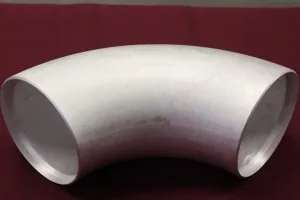
A 90-degree elbow creates a right-angle turn. It is commonly used when a horizontal run must move vertical, when a vertical run must turn horizontal, or when the piping layout needs to follow a rectangular route around equipment or structure. The result is easy to recognize on a drawing, but the final fit still depends on the elbow radius and center-to-end dimension.
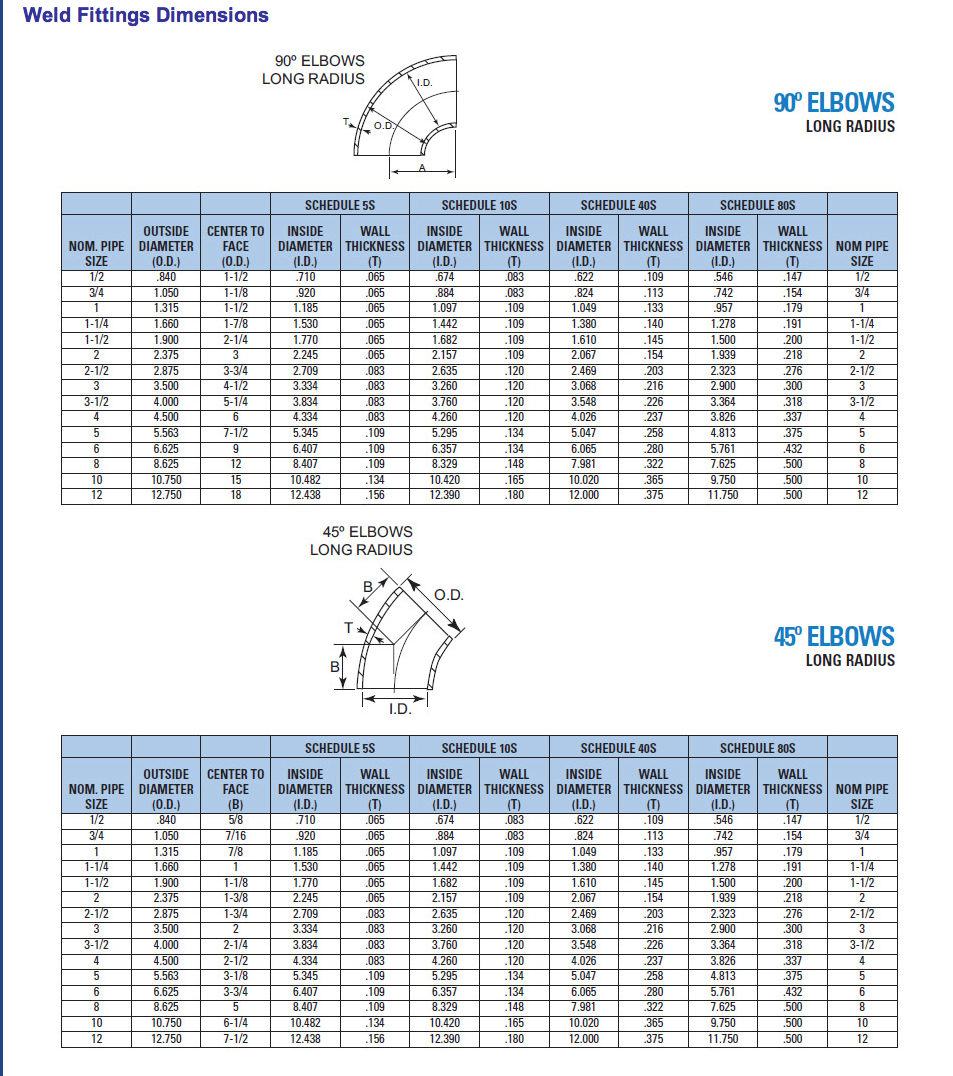
For a standard butt-weld route, use the actual centerline geometry to establish where the downstream pipe begins. The fitting face does not sit at the centerline intersection, so an installation cannot be laid out correctly from the turn angle alone. Check the long-radius or short-radius chart that matches the part before cutting companion pipe or finalizing a spool length.
A 90-degree elbow is not automatically the best answer for every sharp-looking turn. If the intended pipe route is diagonal, or if a two-elbow offset is needed to clear a component, forcing a right-angle turn into the layout can create extra fittings, awkward straight lengths or field changes. Follow the required centerline path instead of simplifying it in the purchase description.
When a 45-degree elbow makes more sense
A 45-degree elbow changes direction by half as much as a 90-degree elbow. It is useful where the pipe needs to move diagonally, where the layout is gradually changing elevation or direction, or where two 45-degree elbows form an offset around an obstruction. That pair can shift a run while keeping the inlet and outlet parallel, provided the straight section between the elbows is sized from the actual drawing.
The smaller angle does not mean the fitting can be treated as a minor detail. A 45-degree elbow still has a center-to-end dimension, a radius, welding ends and material requirements that affect the finished assembly. Check its geometry before the next pipe length is set, especially where the line has limited clearance at a support, valve, equipment nozzle or bulkhead.
For Aluminum Pipe Fittings' listed butt-weld range, long-radius 45-degree and 90-degree elbows are available from 1/2 in. through 8 in. The final requirement still needs the needed schedule or wall, alloy and connection details. Refer to the long-radius 90-degree and 45-degree dimension chart for a practical starting point, then confirm the project requirement before ordering.
Angle and radius are separate checks
A fitting angle tells you how far the pipe turns. Its radius tells you how broad or tight that turn is. A 45-degree or 90-degree elbow can be long radius or short radius, so an angle alone is not a complete description. Long-radius and short-radius elbows land the outgoing pipe in different places, even when the nominal size and angle are the same.
Long radius, often shown as LR, generally gives a broader turn. Short radius, shown as SR, has a tighter geometry. The choice belongs to the piping route and project requirements. If the drawing calls for LR, do not substitute SR because both are 90-degree elbows. If a compact route appears to need SR, make that constraint part of the review rather than assuming the tighter fitting will work with the remaining pipe lengths.
The site’s short-radius and 180-degree dimension chart and its long-radius chart help establish the reference geometry. The existing long-radius versus short-radius elbow guide goes deeper into that separate radius decision. Use both the angle and radius together when reading the drawing.
Check how the turn changes the finished fit-up
Before releasing a fitting request, trace the route from a fixed point through the elbow to the next fixed point. Note the space needed for the fitting, the center-to-end dimension, the length of straight pipe that remains for welding, and the position of the next flange, valve, support or connection. This is where a correct nominal size can still become a bad fit.
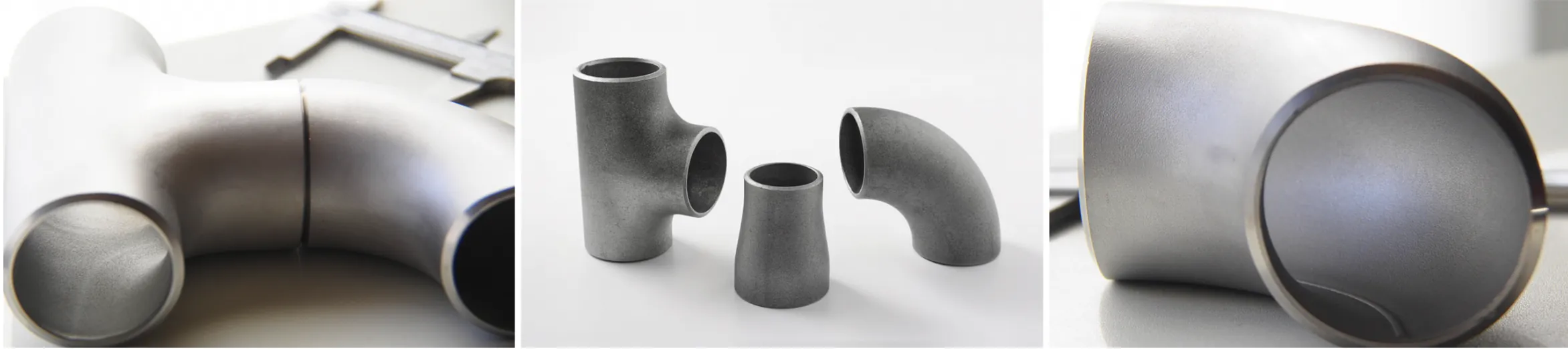
For a 45-degree offset, check both elbows and the straight section between them as one arrangement. The distance between the elbows controls how far the run moves. For a 90-degree turn, check the takeoff from the elbow to the next component. In either case, do not estimate the final path from a product photograph. Use the actual drawing and the chart for the selected geometry.
When replacing a fitting in an existing line, record more than the elbow's outside appearance. Verify the angle, LR or SR designation, nominal size, wall or schedule, alloy, end preparation and key centerline dimensions. A visually similar replacement can still move the connection enough to require a changed spool length or field modification.
Keep the full specification together
Once the angle is selected, complete the fitting callout with the information that controls fit-up and material suitability. For a butt-weld elbow, list the angle, LR or SR designation, nominal pipe size, schedule or direct wall thickness, alloy, end details, quantity and any applicable drawing or material documentation requirement.
Aluminum Pipe Fittings lists 5086 H32 and 6061 T6 as stock aluminum fitting alloys. The alloy should be taken from the job requirement and kept with the geometry and wall information, not added as an afterthought. The aluminum alloy guide provides the available material context, while the aluminum pipe elbow page is the right starting point for the available fitting range.
For factory-made wrought butt-welding fittings, ASME B16.9 is a useful reference for standard fitting dimensions, tolerances, testing and marking. The project drawing and material specification still govern the final order. A standard reference cannot resolve a missing wall, an undefined alloy, or a custom layout requirement.
Know when a custom review is needed
A standard elbow is a good path when the route, angle, radius, nominal size, wall, alloy and end details all match the published range and the drawing. A custom review becomes useful when the layout calls for a nonstandard angle, an unusual center-to-end dimension, added straight tangents, special end preparation, a larger size, a nonstandard wall, or a relationship to a companion fitting that a standard elbow cannot hold.
In that case, send the drawing or a clear sketch with fixed connection points, flow direction where relevant, dimensions that cannot move, alloy, wall, ends, quantity and any inspection or documentation needs. Aluminum Pipe Fittings can review custom fittings, flanges and pipe up to 48 in., but the request needs to show the complete assembly requirement rather than only naming an elbow angle.
Turn a fitting question into a usable request
The best fitting choice is the one that follows the intended pipe route and preserves the dimensions around it. Use a 45-degree elbow when the route needs a smaller directional change or a defined offset. Use a 90-degree elbow when the route needs a right-angle turn. Then verify the radius, dimensions, wall, alloy and ends before material is requested.
Start with the aluminum butt-weld fitting range, compare the applicable dimensions, and send the drawing or written requirement through the quote request page. Giving the sales team the complete route and fitting information makes it easier to review the practical path for the job.
Frequently asked questions
Is a 45-degree elbow interchangeable with a 90-degree elbow?
No. Both fittings may share a nominal pipe size, alloy and wall, but they change the route by different amounts. Replacing one with the other changes where the next pipe end lands and should be checked against the drawing before ordering or fabrication.
When is a 45-degree pipe elbow used?
A 45-degree elbow is used when the piping route needs a gradual direction change, a diagonal offset, or a turn made through more than one fitting. The drawing, clearance, radius, wall and connection requirements determine whether it is the correct choice.
What details should be included in an aluminum elbow request?
State the angle, long-radius or short-radius designation, nominal size, schedule or wall, alloy, end connection, quantity, drawing reference, delivery location and needed-by date. Include special inspection or documentation requirements when they apply.
Do I need to specify long radius or short radius with the angle?
Yes. The angle and radius describe different parts of the geometry. A 45-degree or 90-degree elbow can have a long or short radius, and the radius affects its center-to-end dimension and the space required for the turn.